Irrigation Engineering (3170609) MCQs
MCQs of DIVERSION HEAD WORKS & STORAGE WORKS
| 11. |
The structure finally subsides in the hollow formed in the foundation in which failure?
|
||||||||
|
Answer:
Option (c) |
| 12. |
Heave piping may occur on the _______________
|
||||||||
|
Answer:
Option (a) |
| 13. |
The safety of a hydraulic structure founded on a pervious foundation can be ensured by: i. Provision sufficient length of its concrete floor.
|
||||||||
|
Answer:
Option (d) |

| 14. |
What is the value of Bligh’s coefficient for coarse-grained soil?
|
||||||||
|
Answer:
Option (c) |
| 15. |
For sand mixed with boulder and gravel and for loam soil, the safe hydraulic gradient should be ___________
|
||||||||
|
Answer:
Option (b) |
| 16. |
Which of the following is not a limitation of creep theory?
|
||||||||
|
Answer:
Option (d) |
| 17. |
According to Bligh, a vertical cut-off at U/s end of the floor is less useful than the one at the D/s end of the floor.
|
||||
|
Answer:
Option (b) |
| 18. |
Consider the following statements about Bligh’s Creep Theory. Which of the following statements are correct?
|
||||||||
|
Answer:
Option (a) |
| 19. |
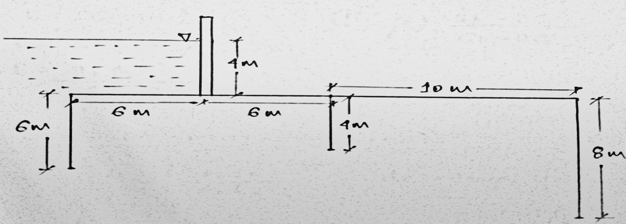
what is creep length ?
|
||||||||
|
Answer:
Option (c) |
| 20. |
Which method is evolved by khosla for designing of hydraulic structures?
|
||||||||
|
Answer:
Option (c) |